

Ask patients why they ended up admitted to the hospital, and the answers rarely sound clinically dramatic. In a recent Advisory Board survey of 254 patients, conducted in partnership with Care Logistics, the leading reasons for admission were need for ongoing monitoring (41%), additional testing (36%), and symptoms that hadn't resolved in the emergency department (31%).
None of those are inherently inpatient-level problems. They're decision-pending problems: patients whose status is genuinely uncertain at the time they arrive, and who need a clear, fast answer: admit or send home. When that decision doesn't happen quickly, these are exactly the patients who take up beds and valuable inpatient resources unnecessarily simply because no one made a faster call.
Why Do So Many Hospital Admissions Start With Monitoring or Testing Instead of a Diagnosis?
The survey data points to a familiar pattern in hospital operations: a bias toward “when in doubt, admit.” As Dr. Brad Mock, EVP/Chief Physician Executive at AnMed Health, put it in the report, this kind of defensive medicine is usually well-intentioned, but it “can contribute to overtreatment by extending hospital stays and consuming capacity, without meaningfully improving patient outcomes.” Patients contribute to the dynamic too, often expecting a “do everything while admitted” approach. Increasingly, they arrive with expectations shaped by social media or AI chatbots rather than clinical necessity.
The cost of that default isn't abstract. The report cites a $3,000 estimated cost for a single additional inpatient day, commonly attributable to nonurgent testing and imaging delays (MRI in particular). Multiply that across a hospital's monitoring-and-testing admissions, and the case for faster, clearer status decisions becomes a capacity argument as much as a clinical one.
What Is the Difference Between Observation Status and Inpatient Admission?
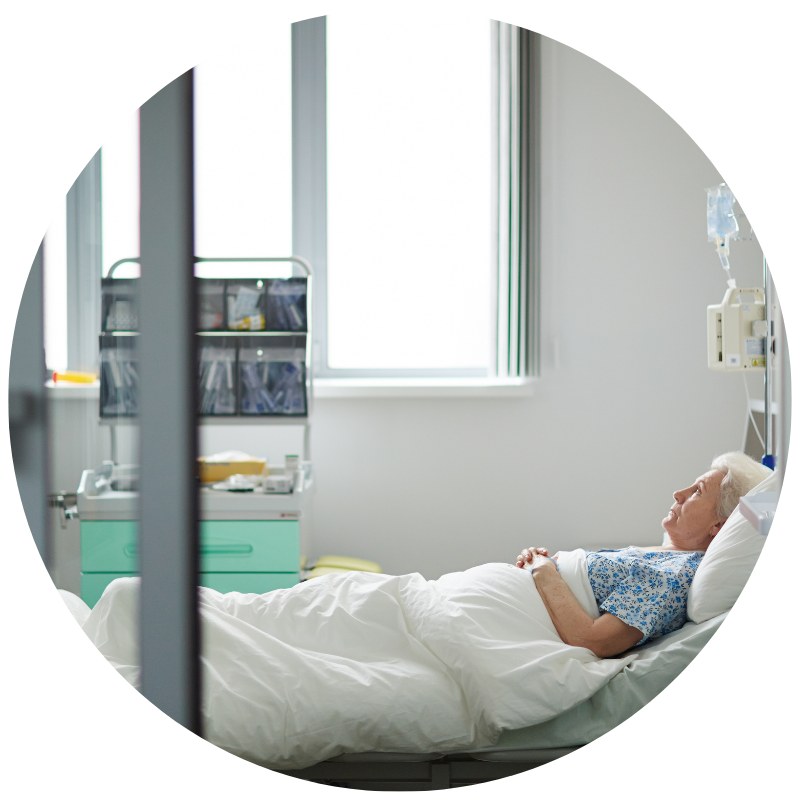
Medicare's two-midnight rule is the clearest public benchmark for this line: if a physician expects a patient's medically necessary hospital stay to span at least two midnights, inpatient admission is generally appropriate; if not, the stay is generally billed as outpatient/observation. It's a payment rule, not a clinical protocol: it doesn't tell a physician how to reach a decision, only which side of the line a given expectation falls on.
That gap between “payment rule” and “operational practice” is where hospitals lose the most time. The overall volume of observation stays has been growing for over a decade: MedPAC documented an 8% annual increase in observation stays per Medicare beneficiary between 2010 and 2014, even as inpatient volume declined. The regulatory attention hasn't gone away, but the operational discipline needed to act on it (clear criteria, a defined decision window, and diagnostics prioritized accordingly) is still inconsistent across hospitals.
How Can Hospitals Decide Observation vs. Inpatient Status Faster?
The report itself points to the fix, even though it doesn't frame it as an “observation management” strategy by name. Two of its recommended levers apply directly:
Real-time review of inpatient diagnostic testing. The report recommends hospitals “regularly evaluate diagnostic orders to identify opportunities to move nonurgent services to outpatient settings,” and specifically that this happen “in real time, rather than after the fact,” which “can help prevent unnecessary hospital days while increasing capacity in diagnostic service lines.” A retrospective chart review catches the problem after the bed and the diagnostic capacity is already gone; a real-time review catches it while they can still be freed.
Defined observation pathways. The report calls for “clear inpatient-versus-observation criteria, defined decision timelines, and prioritized diagnostics for patients whose status remains uncertain,” with the explicit goal of reaching “an admission or discharge decision as quickly and safely as possible rather than defaulting to a full inpatient stay.”
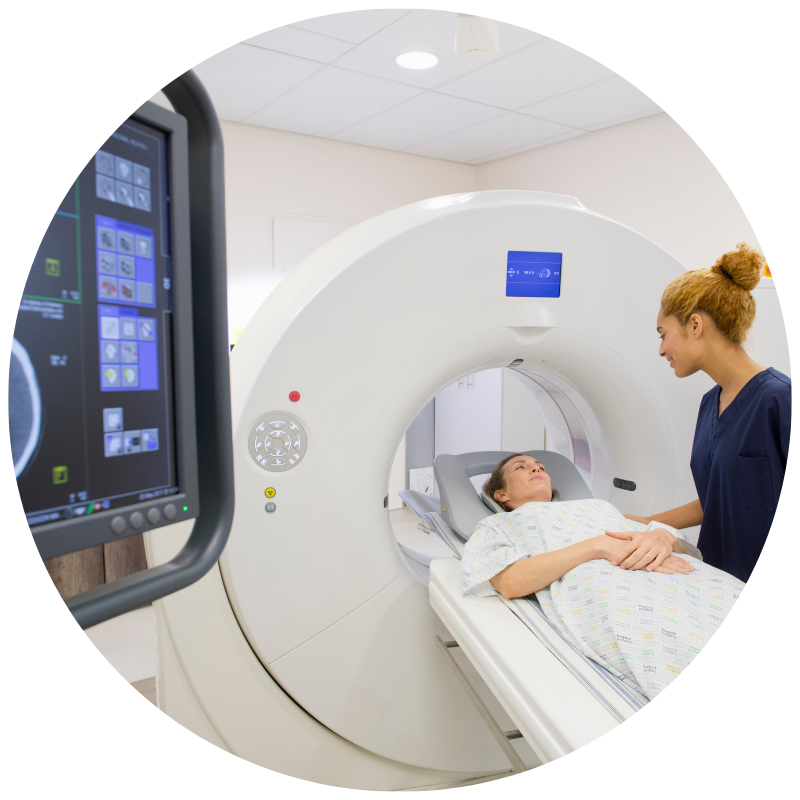
Both levers require the same underlying capability: visibility into which patients are in a pending-decision state, right now, how long they have been in that state, and what specifically is holding up that decision, whether it's a lab result, a consult, or a bed.
The opportunity available here isn't marginal. As of 2026, the average Care Logistics partner achieves the equivalent of 79 additional beds of capacity, without a single new bed build. That's capacity created by deciding faster and more consistently on the patients already in the building, not by adding square footage.
Why Does Faster Status Decision-Making Matter Beyond Bed Capacity?
This isn't only a capacity play. The same survey found that patients rank delays in receiving information, including test results, as the top reason they wouldn't recommend or return to a hospital, ahead of long discharge waits. A patient in observation, waiting on a test to determine what happens next, is living inside exactly the kind of uncertainty the survey identifies as most damaging to the care experience. Deciding status faster isn't just an efficiency gain; it's the same clear, timely communication patients said mattered most to them in the first place.
Getting the status decision right and doing it quickly isn't a workaround for good clinical judgment. It's what makes good clinical judgment operationally sustainable at scale.