Technology alone doesn't fix broken operations. A proven operating model does.
Care Logistics redesigns how hospitals run: a hub-and-spoke operating model centralizes coordination in one operations hub while frontline teams act on real-time intelligence. We put the model in place first with technology added only in service of it.
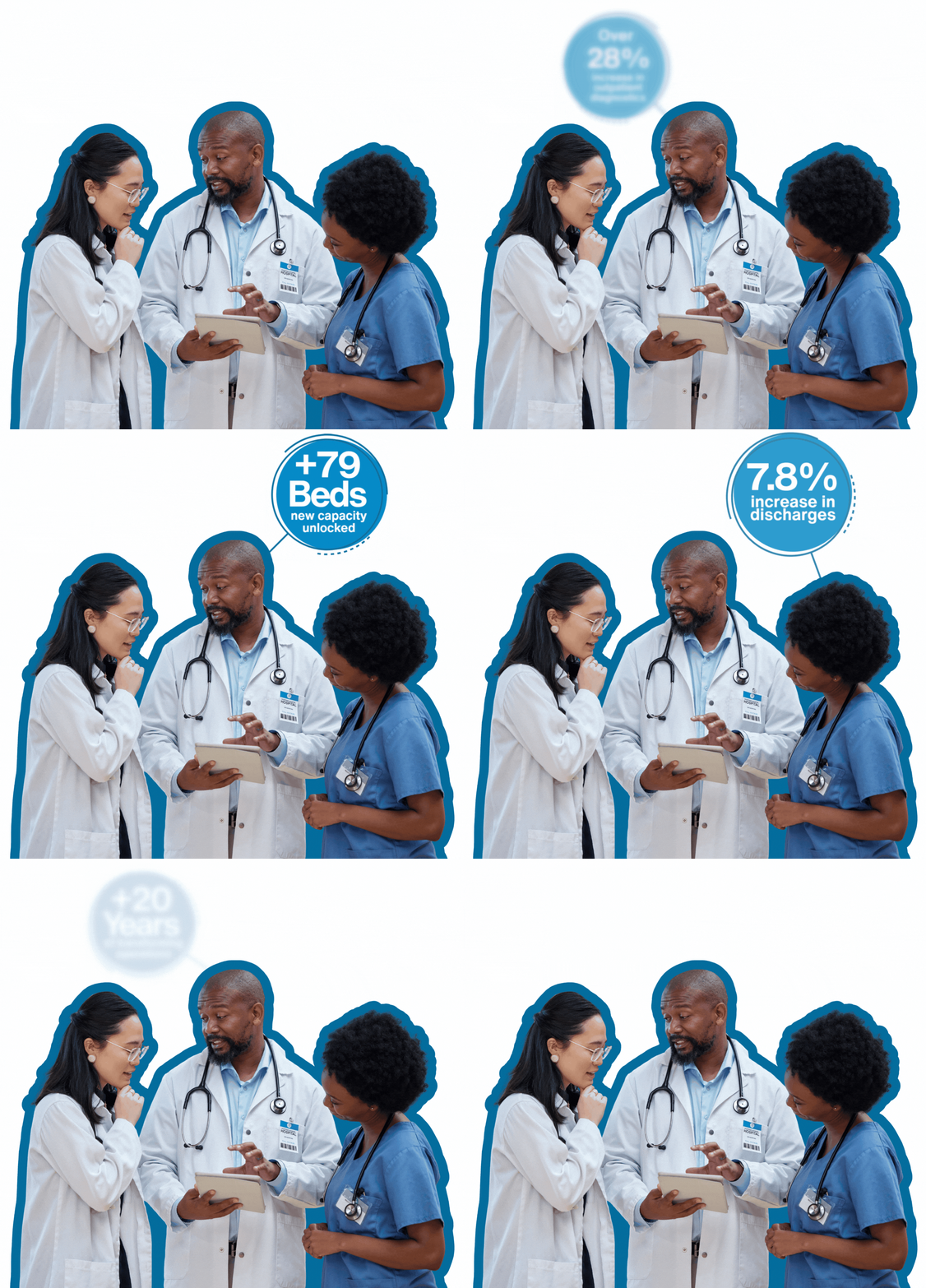
Most vendors install technology and expect your operations to bend around it. That approach is backwards. We redesign the operations first, then hardwire it with technology and AI agents built on the operational model itself. With 20+ years of proven methodology built into the model, the AI has a foundation to solve problems immediately rather than learning on your patients.
Our Operational Model
One of our key offerings is our Operational Model with a comprehensive approach focused on creating or redesigning your hospital’s operating system to optimize efficiency—with or without the addition of new technology.

This model simplifies both daily and strategic complexities of healthcare delivery by implementing a structured approach hardwired by optimized workflows, with the option to enhance it further through our proprietary technology. Our holistic people/process/delivery structure ensures seamless integration and sustainable transformation.
Key Components of Our Operational Model:
Strategy Deployment
Strategy Deployment at Care Logistics is a structured, organization-wide approach to aligning operational execution with strategic goals. It’s not just about planning—it’s a dynamic system that connects leadership vision to frontline action through measurable processes, continuous feedback, and visible accountability. It ensures your organization is focused on doing the right things operationally to achieve strategic priorities such as quality, patient experience, staff engagement, growth, and more. This alignment creates a culture of continuous performance improvement, enabling your team to achieve better outcomes consistently.
Hub and Spoke Delivery Model
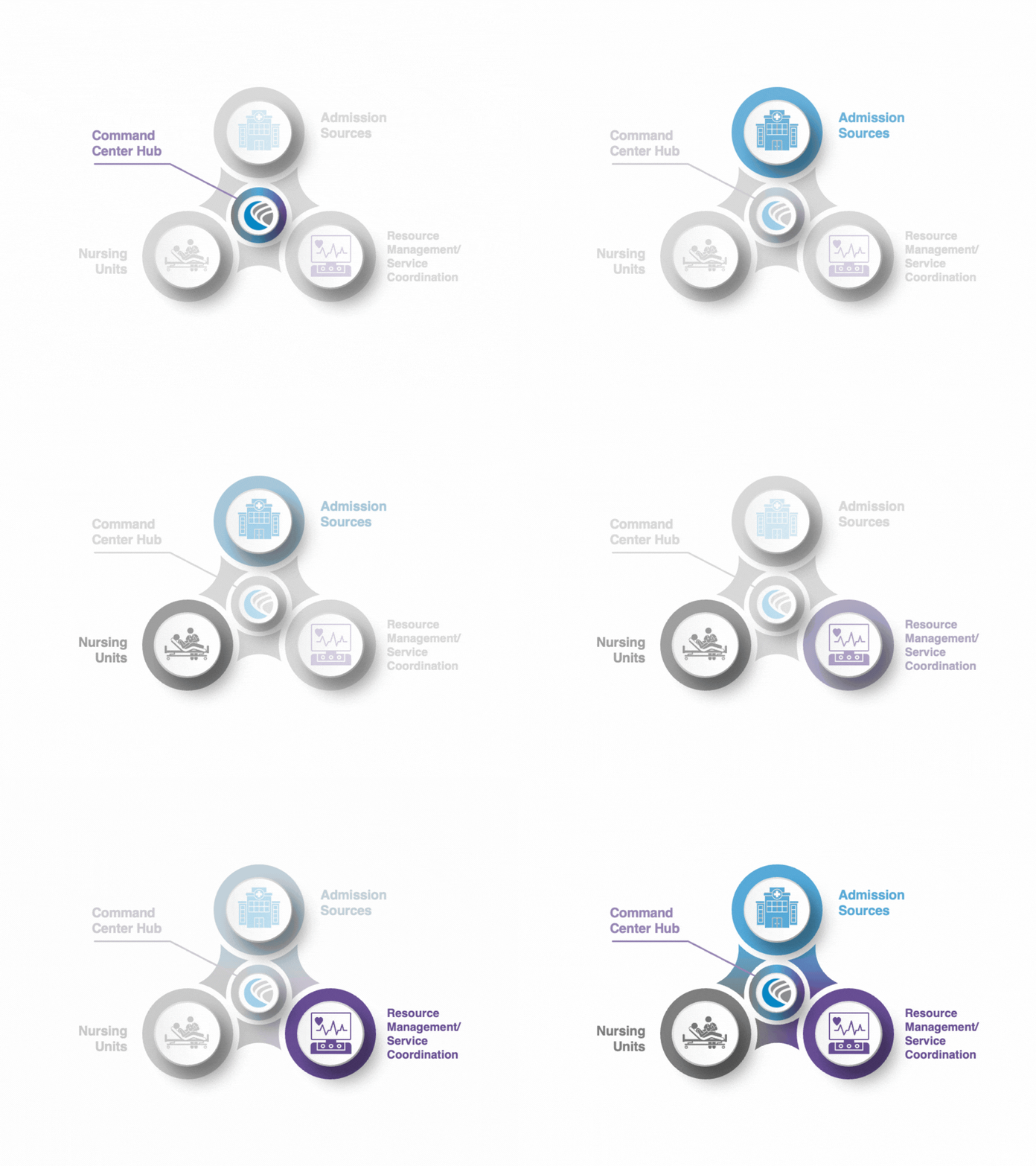
To further enhance efficiency, the operational model includes a Hub and Spoke Delivery Model. This system relieves the burden on frontline staff by managing key activities via a centralized Operational Hub, sometimes referred to as a Healthcare Operations Center or Command Center. Standard operating procedures are consistently aligned to meet the needs of both patients and frontline teams, resulting in a highly reliable, scalable structure.
While the Hub serves as the central command, it’s the Spokes that bring the model to life—acting as the eyes and ears on the ground. The roles in these spokes leverage our technology to enable real-time, bi-directional communication, monitoring, and alerts that keep care operations aligned and responsive. Spokes may host roles like an Admissions owner, who flags incoming patients and ensures placement in the appropriate care setting; a Nursing Unit Patient Progression owner, who keeps patients on track with quality care using our proprietary processes; and Service Area Teams, who coordinate with the Hub’s Order Organizer to deliver timely diagnostics and services.
Wherever possible, the Hub and Spoke Delivery Model leverages existing staff, redesigning their roles and daily standard processes to support the model.
How We Work With You…
Our team of subject matter experts will collaborate with you to:
Develop an optimized and predictable operating system
Implement a Hub and Spoke Delivery Model for care delivery
Create a 24x7 patient progression framework
Leverage both existing and new technology, if needed, to support your model and hardwire the changes for long-term sustainability.
The impact of this Operational Model is not limited to improving efficiency and throughput—it can be applied to drive operational improvements across virtually every strategic pillar within your organization.
Operational Model: Patient Throughput & Progression
Putting the Patient First
Improving the patient journey starts with optimizing how patients move through your hospital and progress towards their discharge goals. Our operational model streamlines patient throughput and progression and ensures each patient advances through care efficiently, safely, and at the right pace.
What Is Patient Progression?
Patient progression is the advancement of a hospitalized patient through the necessary care events and processes toward a health status that allows for a safe transition to a lower level of care. When this process flows smoothly, hospitals avoid delays, prevent bottlenecks, and ensure timely step-downs, transfers, and discharges.
But the reality is complex—multiple departments, clinicians, and staff must be aligned and in constant communication to coordinate patient care. Factors such as staffing levels, service availability, patient volume, and hospital capacity all influence how well this process works.
Common Challenges in Patient Progression:
Many hospitals experience:
Unanticipated barriers to care progression
Undefined or inconsistent length of stay (LOS) targets
Communication breakdowns between departments
Avoidable patient days and missed discharge opportunities
Delays in discharge activities, diagnostic testing, or physician rounding
Poor patient experience and reduced satisfaction scores
These issues are symptoms of a deeper operational challenge: inefficient patient progression.
Operational Strategies That Drive Progress:
The Care Logistics Operational Model addresses these barriers head-on by:
Aligning care teams to LOS targets based on diagnosis and patient condition
Establishing clear progression goals for every patient
Standardizing care plans and defining appropriate DRGs
Encouraging daily interdisciplinary huddles to promote communication and accountability
Facilitating better handoffs between departments to prevent delays
Identifying and addressing common progression barriers—such as delays in testing, medication, or clinical decision-making—before they impact patient care
Physician alignment is a critical element. Without it, meeting LOS targets becomes significantly harder. Our model supports efforts to align physicians with organizational goals to ensure patients progress efficiently and appropriately.
Why Patient Progression Matters:
Delayed progression can compromise patient safety, increase length of stay, and reduce hospital capacity. For instance:
Diagnostic testing delays take an average of two days to resolve
A single medical progression delay can add 48+ hours to a patient’s stay
Crowded EDs, delayed diagnostics, and delayed discharges are often the result of progression issues
By focusing on operational discipline and coordinated care, hospitals can mitigate these delays and keep patients on the right path.
Results You Can Expect…
Hospitals that adopt our operational approach to throughput and progression typically see:
Reduced Length of Stay (LOS)
Increased Case Mix Index (CMI)
Lower readmission rates
Better patient outcomes and satisfaction
Increased capacity and ability to admit more patients


Operational Model: Resource Management
Matching Resources to Demand
At Care Logistics, we believe resource management is not just a function—it’s a byproduct of a well-structured operational model. A hospital’s ability to deliver timely, high-quality care depends on how effectively it organizes, aligns, and governs the use of its people, time, equipment, and space. That’s exactly what our operational model does.
When operations are aligned around patient care goals, resource management becomes intentional, efficient, and sustainable.
Driving Resource Decisions Through Operational Awareness
At the core of our operational model is informed awareness—a systemwide understanding of what’s happening, what’s needed, and what’s coming next. That awareness is what enables hospitals to make the right resource decisions every day.

Our model builds this awareness by:
Establishing reliable processes that bring together clinical and operational perspectives
Creating real-time visibility into capacity and patient progression
Leveraging technology to drive alignment and improved efficiency
Standardizing decision-making structures across departments
This enables hospitals to allocate resources according to actual needs, not assumptions or outdated patterns.
Structuring the System Around Staff Optimization
The operational model sets the foundation for getting the most from your existing workforce. When workflows are coordinated and predictable, staff are empowered to work at the top of their license, avoid redundant tasks, and focus on what matters most—patient care.
This model:
Aligns staffing with demand
Reduces wasted effort from poor communication or unclear priorities
Enables care teams to collaborate with clarity and accountability
It’s not only about doing more with less—it’s also about doing the right work with the right team at the right time.
Operationalizing Diagnostic Stewardship
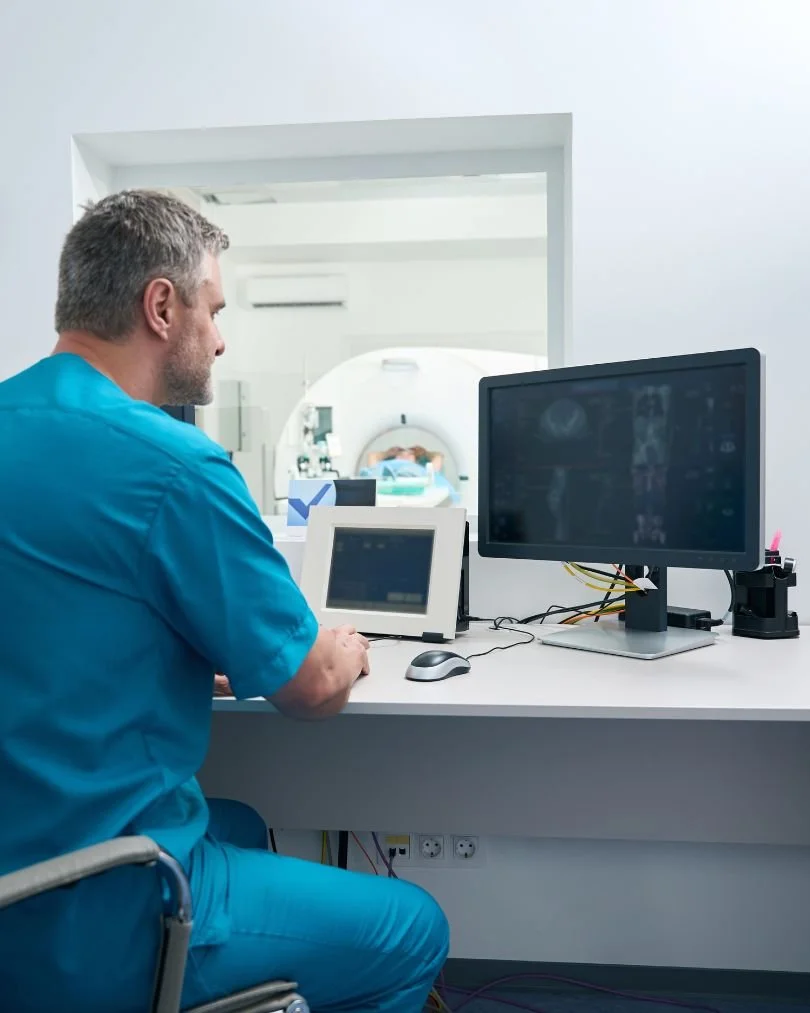
In many hospitals, diagnostic resources are overutilized simply because there’s no operational model in place to guide their use.
We change that.
Our Model:
Builds accountability for ordering practices into daily clinical operations
Creates visibility into diagnostic queues and resource availability
Connects diagnostic decisions to progression goals
The result is more efficient test utilization, reduced patient delays, improved diagnostic capacity, and better throughput—all driven by the operational structure, not just clinical preferences.
Optimizing the Admission Process
Hospitals often face challenges managing patient admissions efficiently— admission requests originate from various sources like the ED, PACU, or direct referrals, frequently without a clear plan for placement. This can lead to delays, misaligned care settings, and strain on clinical and operational teams. The Care Logistics Operational Model addresses these issues by assigning clear ownership to frontline roles responsible for identifying and flagging incoming patients. These roles use real-time technology to communicate directly with a centralized coordination hub, ensuring that each patient is placed in the most appropriate care setting from the outset. This proactive approach reduces bottlenecks, improves throughput, and enhances the patient experience by aligning clinical needs with operational readiness.
Embedding Proactive Patient Statusing Into Daily Operations
Patient statusing is not just a billing exercise—it’s a core operational decision that affects beds, staffing, revenue, and clinical appropriateness. Our operational model makes accurate patient statusing a standard part of daily hospital rhythm.
Through structured rounds, shared expectations, and cross-functional alignment, we ensure:
Patient status is correctly set from the start
Transitions between statuses are timely and appropriate
The appropriate resources are available for the patient's current status and level of care
This level of discipline results in fewer avoidable days and a more appropriate use of inpatient capacity.

The Healthcare Operations Center:
Centralizing for System-Wide Success
At the heart of the Care Logistics model is the Healthcare Operations Center, commonly referred to as the Hub. This centralized command center serves as the operational core of the organization, bringing together critical functions like bed placement, staffing coordination, diagnostic scheduling, transport, and environmental services. By centralizing these roles, the Hub provides real-time visibility across the entire care continuum, enabling proactive decision-making and seamless coordination.
The Hub transforms fragmented operations into a unified system by leveraging bi-directional communication and advanced technology to monitor, alert, and adjust in real time. It empowers frontline teams with actionable insights and recommendations, ensuring that every patient receives timely, appropriate care while optimizing resource utilization. It also saves the frontline teams time on administrative tasks that can be centralized or automated, giving them more time to spend on what is most important: caring for their patients.
This centralization not only eliminates silos but also hardwires operational excellence, creating a predictable, scalable model that supports strategic goals and drives measurable outcomes across the enterprise.
Sustainability Through Operational Efficiency
In today’s environment, hospitals must meet rising demand without always adding new staff or expanding physical capacity. Our operational model is designed for exactly that: doing more with the right systems in place.
By driving discipline in how care is delivered and coordinated, our model helps hospitals:
Increase capacity, often without growing headcount
Improve financial margins without cutting care
Reduce burnout and turnover by making work more manageable
This isn’t just cost control—it’s sustainable excellence, powered by a proven operational framework.
The Role of the Operational Model in Hospital Success
At Care Logistics, we view efficiency as a consequence of operational design. When your model is structured to support coordination, accountability, and clarity, everything improves—from patient outcomes to financial performance.
Operational excellence isn’t an initiative. It’s a way of working—and it starts with how you manage operations every single day.
Why Choose Care Logistics?
By choosing Care Logistics for your Operational Model, your hospital will benefit from a proven, scalable operating system tailored to your unique operational challenges. This model enhances efficiency, improves patient care, and drives continuous performance improvement. For almost two decades, we have been helping hospitals and health systems meet their strategic goals. Our expertise in operational transformation ensures that your organization is equipped to meet the challenges of today’s healthcare environment, with a system designed to evolve as your needs grow.